Commercial fire alarm systems play a critical role in protecting lives and property—but they are not systems you can install and forget. Regular inspection and testing are required to ensure proper operation, code compliance, and insurance protection.
For commercial property owners and managers in Clifton Park and the Capital Region, understanding inspection requirements is essential. According to Eric Gandler, a master-licensed fire alarm professional, staying ahead of inspection schedules is one of the easiest ways to avoid violations, fines, and system failures.
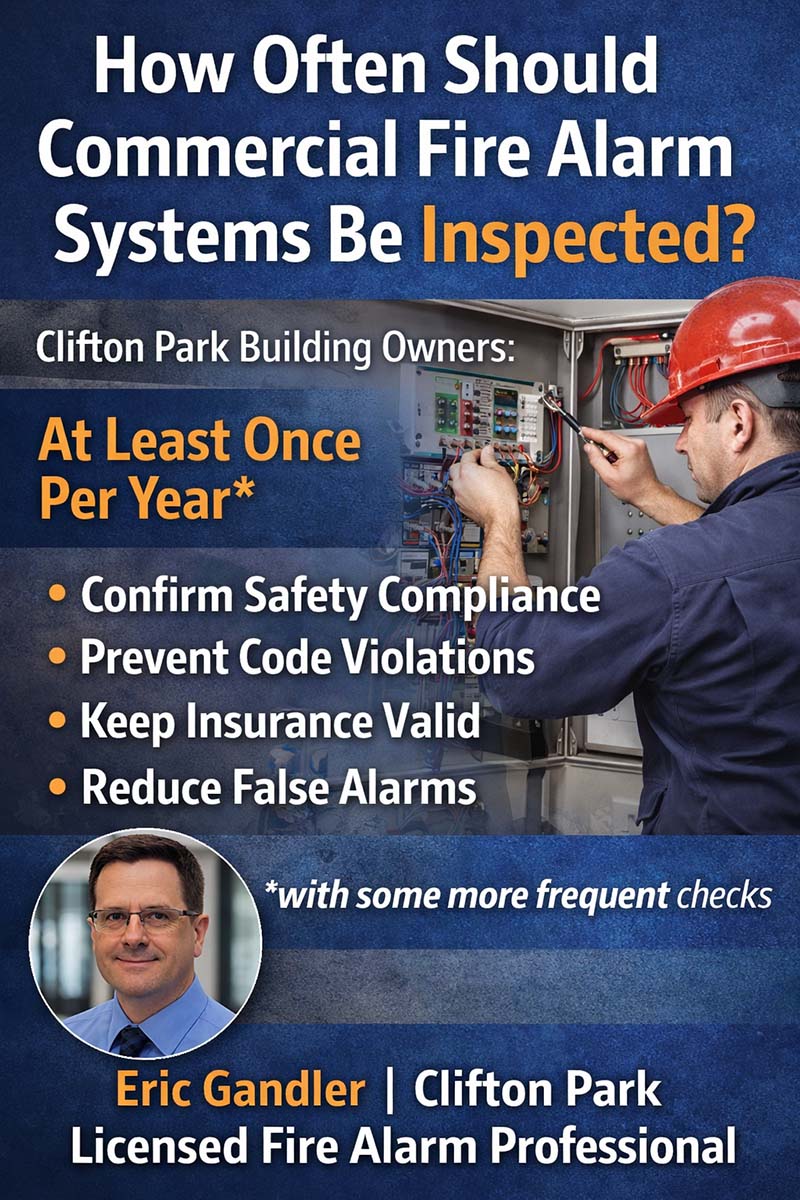
So how often should commercial fire alarm systems be inspected? The short answer: at least once per year, with certain components requiring more frequent checks.
Fire Alarm Inspection Requirements Explained
Most commercial fire alarm inspection schedules are governed by NFPA 72 – the National Fire Alarm and Signaling Code, which is widely adopted across New York State and enforced by local fire marshals.
Under NFPA 72:
-
A full system inspection and test is required annually
-
Some components must be inspected monthly, quarterly, or semi-annually, depending on system design and building use
Local Authorities Having Jurisdiction (AHJs), including those serving Clifton Park, may require additional documentation or testing beyond the national standard.
Typical Commercial Fire Alarm Inspection Schedule
🔹 Annual Fire Alarm Inspection
Once per year, a licensed fire alarm contractor must perform a comprehensive inspection and test, which typically includes:
-
Fire alarm control panels
-
Smoke detectors, heat detectors, and pull stations
-
Horns, strobes, and speakers
-
Primary and backup power supplies
-
Signal transmission to monitoring services
-
System programming and records
As Eric Gandler emphasizes, proper documentation is just as important as the inspection itself. Annual inspection reports are commonly required for insurance renewals and fire marshal reviews in Clifton Park and surrounding areas.
🔹 More Frequent Inspections (Monthly / Quarterly / Semi-Annual)
Certain system components require additional attention, including:
-
Valve supervisory switches
-
Batteries and power supplies
-
Devices in harsh or high-traffic environments
-
Emergency communication systems
The required frequency depends on occupancy type, building size, and system complexity.
Why Regular Fire Alarm Inspections Matter
1. Life Safety
A properly inspected fire alarm system ensures occupants receive early warning during an emergency. Regular testing helps confirm the system will perform as designed when it matters most.
2. Code Compliance
Missing required inspections can lead to:
-
Fire code violations
-
Failed fire marshal inspections
-
Fines or mandatory corrective action
For commercial buildings in Clifton Park, staying compliant avoids unnecessary downtime and enforcement issues.
3. Insurance Protection
Many insurance carriers require current fire alarm inspection records. Skipped or incomplete inspections can result in:
-
Delayed claims
-
Reduced coverage
-
Increased premiums
4. Reduced False Alarms
Routine inspections identify issues such as dirty detectors, wiring faults, or programming errors—helping reduce nuisance alarms and emergency response disruptions.
Who Should Perform Commercial Fire Alarm Inspections?
Commercial fire alarm inspections must be conducted by a properly licensed fire alarm professional. According to Eric Gandler, inspections should never be performed by unqualified contractors or maintenance staff.
Licensed professionals understand:
-
Fire alarm system design and logic
-
NFPA code requirements
-
Proper testing procedures
-
Accurate reporting and certification
Using the wrong provider can leave your system out of compliance—even if the inspection appears complete.
What Happens If Inspections Are Skipped?
Failing to keep up with fire alarm inspections can result in:
-
Failed fire marshal inspections
-
Enforcement actions or fines
-
Insurance complications
-
Increased liability for property owners
Most importantly, skipped inspections increase the risk that the fire alarm system will not function properly during an emergency.
Final Thoughts
In most cases, commercial fire alarm systems must be fully inspected at least once per year, with additional inspections required throughout the year depending on system components and building use.
For commercial property owners in Clifton Park, working with an experienced, licensed professional like Eric Gandler helps ensure inspections are performed correctly, documented properly, and completed on schedule.
Staying proactive with fire alarm inspections protects lives, maintains compliance, and provides peace of mind—knowing your system is ready when it matters most.